Thank you to those of you who were able to complete the survey that we recently sent out.
It’s a great way to let us know what you think and where we should focus our attention. Due to the glitch on the first email that had a link to our testimonial survey, some of you were kind enough to complete this too.
If you didn’t get a chance, it’s never too late to let us know what you think.

Satisfaction survey 2022
Whilst we have received some fantastic feedback, we’re conscious that this is only a reflection of those who completed the survey.
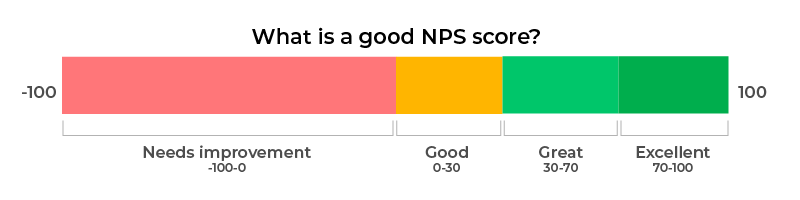
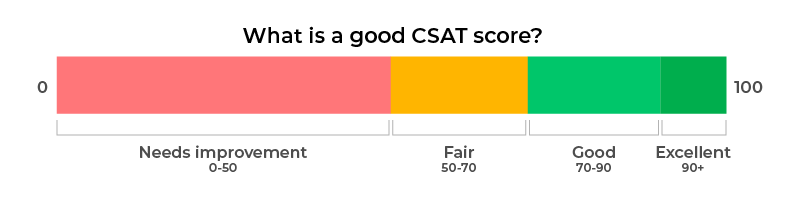
150 recipients who were owners or managers of organisations that take our Support+ managed service plan. The creators of the NPS metric, Bain & Company, say that although an NPS score above 0 is good, above 20 is great and above 50 is amazing. Anywhere above 80 is the top percentile. Retently 2022 NPS benchmark for B2B gives the average NPS score for Technology and Services 61, Cloud and Hosting 25, B2B Software and SaaS 40.
It’s very important to cover some of the areas where we know we could do more.
More effective escalation
A large amount of the things you and your team ask us to help with can be handled by our front line and first line teams and we’ve put a huge amount of effort into making sure that when we get a call or a critical incident, we are immediately there to help.
The introduction of our closed ticket survey has proved to be a great way of getting real-time feedback on how we are doing and in conjunction with the launch of the 60-second challenge last year, we now get real-time data that’s helping us identify our busiest periods and ensure that these are thoroughly resourced to ensure you and your team are only a few seconds away from talking to a tech if they need help.
One area that we know we could do better is where the fault is more complex and needs one of our more experienced colleagues. These faults can often take multiple potential fixes and have extended resolution times. We know that when we get these types of faults, it can be difficult for our front line team to advise on time scales due to how we allocate and escalate these, and we never want to quote our documented response time to you or your team as we always want to do better than this.
So, what’s the plan?
Firstly, we have introduced a new incident type to reflect a small number of issues that can cause a significant impact on individual users.
The new Critical user incident type will be used where it is identified that a user is either fully unable to work or where a critical system is impacted and where there is no alternative or workaround. Whilst this would have been prioritised over a lessor incident in the same category, this would have technically attracted a four-hour response time – a long time by any measure if a user cannot work.
We should also say that by response time we mean a tech working on the ticket and not an automated email, you get those within 30 seconds of logging a fault.
Now, as soon as a Critical user incident is identified the issue will attract an enhanced one-hour response, we will update the user on this if they reach us via a call and an enhanced process will be followed to prioritise and track this through to resolution. When a user-related fault needs to be escalated and it’s not classified as critical, we will be far better at letting users know we will be working to a four-hour escalated response time.
Secondly, from January, we are launching a new team called Cloud and Infrastructure. The team will be over 30% larger than our current escalation team is now, and it will handle everything from ticket escalation, back up, disaster recovery, training, research, and development to the delivery of upgrades and projects. With a larger team and some very experienced colleagues on hand, we hope to speed up the progression of more complex faults and the training and progression of colleagues in the more front line roles.
Monthly innovation workshops
Whilst we have increased the number of communications you receive from us and these range from service announcements to new products and innovations we feel you should be aware of, there is always more we can do and finding a proactive and efficient way of getting this information to you is one area we know is crucial.
From January, we are launching our new monthly innovation virtual workshops that will complement our popular cyber awareness training programme. These workshops will likely be on a fixed date each month and open for you, or any of your team, to join. We will run a series of short sessions throughout the day that will cover key topics ranging from the latest Microsoft features (those interesting and good to know), security sessions, to demonstrations of various aspects of the Microsoft modern workplace.
Account management
We’ve always been resistant to anything that could be a barrier between you and the best person at our end to talk to about anything non-fault related and it’s for this reason we do not have a dedicated sales-focused account management team.
Whilst the survey highlights that 87.50% of people know how to contact us and feel they get the advice and guidance needed, we know that we do not have as many proactive conversations or discussions as we could in some circumstances.
To help us address this, we will be sending out a monthly email to points of contact and VIPs with useful updates, links to book a place on our monthly innovation workshops or cyber security training, and links to schedule account discussions at a date and frequency that suits you.
Fancy talking to us about any of the above?
Give us a call, send an email or arrange a meeting.